Future Career: A Modern Typeface for Crisp, Clean Design
Why This Sans Serif Feels Instantly Familiar
There’s a particular kind of font that doesn’t shout for attention but still manages to hold it. Future Career is that font. It carries the quiet confidence of a well-tailored outfit—nothing flashy, nothing fussy, just clean lines and thoughtful proportions that signal competence. If you’ve ever struggled to find a typeface that works across your entire brand without looking repetitive or bland, this might be the answer you didn’t know you were searching for.
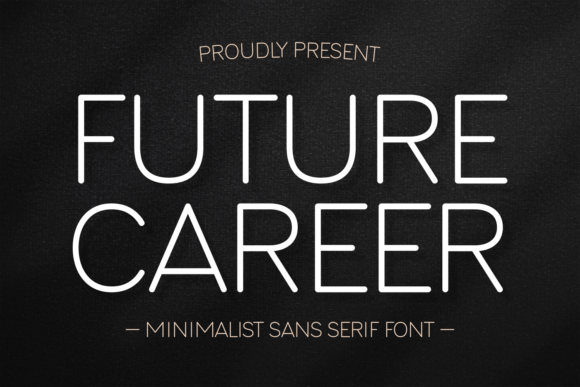
At its core, Future Career is a modern sans serif with a minimalist sensibility. The letterforms are geometric but not rigid, with enough subtle warmth to avoid feeling sterile. Think of it as the typographic equivalent of a Scandinavian-designed workspace: functional, attractive, and surprisingly adaptable. The x-height is generous, the spacing feels intentional, and the overall impression is one of clarity. This isn’t a font that tries to be everything—it simply does its job exceptionally well.
Where Clean Typography Actually Makes a Difference
Let’s talk about real projects. You’re designing a logo for a boutique skincare brand. You need something that communicates purity and sophistication without looking cold. Future Career handles this beautifully because its structure suggests reliability while its openness feels approachable. The same font can then carry over onto packaging labels, maintaining that visual thread without needing to introduce a second typeface just for variety.
Or consider social media graphics. If you’re a content creator posting daily on Instagram or Pinterest, you know how quickly visual inconsistency creeps in when you’re using different fonts for different moods. A versatile sans serif like this one lets you create templates that feel cohesive whether you’re sharing a quote, announcing a sale, or posting a behind-the-scenes snapshot. The consistency builds recognition—your followers start associating that clean, modern look with your voice before they even read the caption.
Here’s where Future Career really earns its place in your toolkit:
- Brand identity systems where you need one typeface to anchor everything from business cards to website headers
- Editorial layouts for magazines, lookbooks, or digital publications where readability at smaller sizes matters
- Web design where legibility on screens—whether someone’s viewing on a phone or a desktop monitor—is non-negotiable
- Invitations and event materials that need to feel polished without being overly formal
- Merchandise design like tote bags, mugs, or apparel where text needs to read clearly at various scales
- Marketing assets including email headers, ad banners, and pitch decks where professional presentation influences how seriously people take your message
Pairing It Without Overthinking
One of the most practical strengths of a well-designed sans serif is how willingly it plays with others. Future Career doesn’t demand to be the loudest voice in the room, which makes font pairing surprisingly straightforward. Want to add a touch of personality? Try combining it with a handwritten font for accent text on a wedding invitation or a product tag. Need editorial gravitas? Pair it with a classic serif for body copy in a magazine spread—use the sans serif for headlines and the serif for paragraphs, and you’ve got a layout that feels both contemporary and grounded.
The key is to let each font do what it does best. Future Career excels at clarity and structure, so lean into that. Use it where information needs to be absorbed quickly: navigation menus, pricing tables, call-to-action buttons, product descriptions. Then bring in a contrasting typeface—maybe a script font for a logo monogram or a display font for a hero banner—to add dimension. The result feels intentional rather than chaotic.
Before you commit to any font pairing, test it in context. Drop both typefaces into your actual layout, not just a specimen sheet. See how they interact at the sizes you’ll actually use. Check the spacing. Read a full paragraph set in the body font and make sure your eyes don’t tire. These small experiments save you from discovering problems after you’ve already built out a full campaign.
Readability Isn’t Optional—It’s the Whole Point
We sometimes treat readability as a checkbox item, something to verify once and move on from. But it’s actually the foundation of effective visual communication. A beautiful font that people can’t comfortably read is a failed font, no matter how elegant its curves. Future Career’s design prioritizes legibility through open apertures, consistent stroke widths, and generous letter spacing. These aren’t technical details for type nerds—they’re the reason your website visitors don’t bounce, why your packaging gets picked up off the shelf, why someone actually finishes reading your brochure.
Think about the environments where your designs will live. A poster viewed from ten feet away. A mobile screen held at arm’s length. A business card handed across a coffee shop table. Each context demands different considerations, and a versatile sans serif adapts to those demands without requiring you to hunt for alternatives. The weight options matter here too—lighter weights for airy, editorial aesthetics; medium weights for balanced readability; bolder weights for emphasis and hierarchy.
Licensing and the Business of Fonts
This part isn’t glamorous, but it matters more than most people realize. When you’re using a font for commercial work—client projects, products you sell, branded content you monetize—you need to understand what the license allows. Future Career, as a premium font, typically comes with a commercial license that covers these uses, but always verify the specifics. Does the license cover unlimited projects? Can you embed it in digital products you distribute? Are there restrictions on the number of devices or users?
These aren’t hypothetical concerns. I’ve seen small business owners face unexpected licensing issues months after launching a brand, scrambling to find a replacement font because they misunderstood the terms. Taking five minutes to read the license agreement protects the hours you’ve already invested in your design work. It’s the unglamorous part of choosing a creative font, but it’s what separates professional practice from amateur guesswork.
Making It Your Own
What ultimately makes a typeface worth recommending isn’t its technical specs or its aesthetic appeal in isolation—it’s how well it serves the people who use it. Future Career works because it solves real problems. It gives designers a reliable foundation. It gives small business owners a way to look polished without hiring an agency. It gives content creators visual consistency without creative monotony.
The best typography decisions happen when you stop thinking about fonts as decorative choices and start seeing them as communication tools. What does your audience need to understand at a glance? What feeling should linger after they’ve looked away? How does this particular set of letterforms support the story you’re telling? A modern typeface like this one doesn’t answer those questions for you—but it clears away enough visual noise that you can find the answers yourself.
Whether you’re building a brand from scratch, refreshing an existing identity, or simply looking for a dependable sans serif that won’t let you down across a dozen different applications, Future Career deserves a spot in your shortlist. It won’t do the creative thinking for you, but it will make sure whatever you create looks considered, cohesive, and unmistakably professional.