Fancy Berry Duo: A Font That Feels Like a Sunday Morning
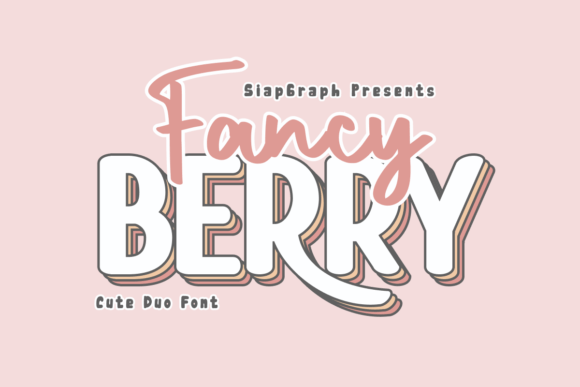
There's something about a handwritten font that instantly adds warmth to a design. Maybe it's the imperfections, the slight variations in each letter, or the way it feels like someone actually sat down and wrote something just for you. That's the energy Fancy Berry Duo brings to the table—a charming, feminine display typeface with natural, playful strokes that feel approachable without sacrificing polish. If you've been hunting for a font that bridges the gap between casual and put-together, this one deserves a closer look.
Two Styles, One Cohesive Voice
What sets this typeface apart from a standard handwritten font is that it comes in two complementary styles. That means you're not locked into a single visual tone—you can mix and match depending on the mood of your project. One style might lean slightly more structured for headings, while the other offers a looser, more relaxed feel for accent text or subheadings. This kind of built-in versatility is genuinely useful, especially when you're working on projects that need visual variety without introducing competing typeface families.
Think about a wedding invitation suite. You could use one style for the couple's names and the other for the details—date, time, venue. The result feels coordinated rather than chaotic, which is exactly the kind of subtle design thinking that separates a good project from a forgettable one. The same logic applies to logo design, where a primary mark might use one weight and a tagline uses the other.
Where This Font Actually Works
A lot of display font options look gorgeous in previews but fall apart in real-world application. Fancy Berry Duo avoids that trap because its letterforms are legible at various sizes, and the two styles give you enough range to tackle different parts of a single project. Here's where it shines in practice:
- Branding and brand identity for lifestyle businesses, boutiques, bakeries, wellness brands, or any company that wants to feel personal and inviting.
- Packaging design for artisan products, candle labels, skincare lines, or food items where a human touch matters.
- Social media graphics—especially Instagram posts, Pinterest pins, and story templates where you want text to feel hand-lettered but consistent.
- Blog headers and website accents that need personality without compromising the readability of body copy (which should still use a clean sans serif font or serif font).
- Print materials like business cards, thank-you cards, flyers, and posters for events, markets, or pop-up shops.
- Digital products such as planners, journals, sticker sheets, and quote prints sold on Etsy or Creative Market.
- Editorial design for magazine pull quotes, chapter openers, or cookbook headings.
- Merchandise—think women's t-shirts, tote bags, and mugs where a script font or handwritten font adds that boutique feel.
- Invitations for birthdays, baby showers, bridal showers, and seasonal gatherings.
- Marketing assets including email headers, sale announcements, and promotional graphics.
The key takeaway here is range. This isn't a novelty font you'll use once and archive. It's the kind of design asset that earns its spot in your regular rotation, especially if your work leans toward feminine, playful, or lifestyle-oriented aesthetics.
Pairing It With Other Fonts
No premium font lives in isolation. Even the most beautiful handwritten font needs a partner to handle the heavy lifting—body text, captions, data, and anything that needs to be read quickly at smaller sizes. Fancy Berry Duo pairs well with clean, neutral typefaces. A simple sans serif like Montserrat or Lato keeps things balanced. If you prefer more contrast, a classic serif like Playfair Display or Cormorant Garamond can create a sophisticated tension between formal and casual.
When testing font pairing, set your headline in Fancy Berry Duo and your paragraph text in your secondary choice. Read it at actual size—not just on a design canvas zoomed to 200%. Check how the combination feels on a phone screen, in print, and at arm's length on a poster. Good typography isn't just about aesthetics; it's about readability across every context where your audience will encounter it.
Small Details That Make a Big Difference
The included uppercase and lowercase letters give you flexibility for different typographic treatments. Uppercase in a handwritten font tends to feel bold and declarative—great for headlines and short statements. Lowercase feels conversational and intimate, which works beautifully for quotes, journal prompts, or product descriptions. Having punctuation included is also worth noting, because some script font and display options skip the basics, leaving you scrambling for workarounds mid-project.
For Canva projects, this font uploads easily and works well within Canva's text editor, making it accessible for small business owners and content creators who aren't working in Adobe Illustrator or InDesign. If you're building social templates, creating a product line, or designing marketing assets for a client, the ability to work across platforms without friction is a genuine time-saver.
Matching the Font to Your Project's Personality
Before committing to any creative font, ask yourself what emotional register your project needs. Fancy Berry Duo communicates warmth, femininity, playfulness, and a handmade sensibility. That makes it a strong choice for brands and projects in wellness, beauty, food, lifestyle, children's products, and creative services. It's probably not the right fit for a fintech startup or a corporate law firm—but that's the point. No single typeface works for everything, and the best designers know how to match modern typography choices to the specific personality a project demands.
If you're building a brand identity from scratch, start by collecting visual references—photos, colors, textures, and other fonts that capture the feeling you're going for. Then test Fancy Berry Duo against that mood board. Does it feel like it belongs? Does it reinforce the story you're telling? If the answer is yes, you've found a strong contender.
A Few Practical Notes on Licensing
One thing that often trips up independent creators is commercial font licensing. Before using any font in a client project, merchandise for sale, or a product you plan to distribute, confirm that the license covers commercial use. Most premium font licenses are straightforward, but it's worth reading the terms so you're not caught off guard later. This is especially important for packaging design, merchandise, and digital products where the font becomes part of something you're selling.
Fancy Berry Duo is the kind of font that rewards thoughtful use. It doesn't try to do everything—it does one thing exceptionally well, and it does it with genuine charm. Whether you're designing a grocery list for your fridge, a sticker set for your Etsy shop, or a full brand identity for a client, having a reliable, versatile handwritten font in your toolkit makes the creative process smoother and the final result more cohesive.