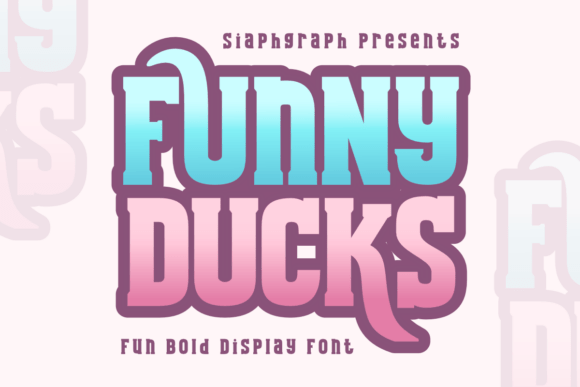
Funny Ducks: The Font with a Cheeky Personality
Let's be honest: most fonts play it safe. They're designed to be neutral, to recede into the background, to not make a fuss. But what happens when your project needs a voice? What happens when you want to deliver a punchline, share a sarcastic observation, or just make someone smile before they've even read the words? You need a typeface that doesn't just sit on the page—it performs. This is where a bold, playful display font with a distinct personality becomes your most valuable design asset.
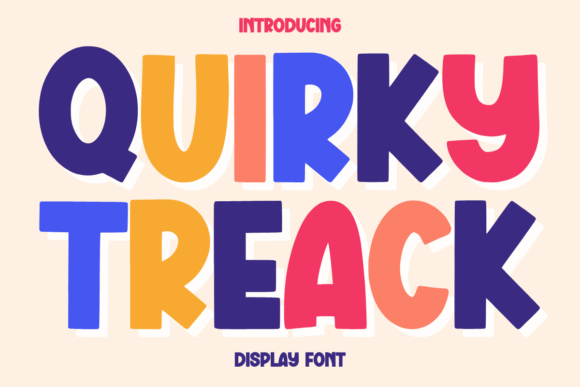
Imagine a typeface that feels like it's winking at you. The letterforms are chunky and confident, with a soft, rounded quality that keeps them from feeling aggressive. There's an inherent sense of humor baked into the curves and terminals, a visual equivalent of a deadpan delivery. This isn't a font for legal disclaimers or annual reports. It's for the witty greeting card, the sarcastic coffee mug, the t-shirt that gets a knowing laugh from across the room. It's a creative font that understands context and isn't afraid to have a little fun.
Where Attitude Meets Application
The true test of a characterful typeface is its versatility. A font with this much personality might seem niche, but its applications are surprisingly broad when you understand its strengths. It thrives in spaces where communication is casual, direct, and emotionally resonant.
Think about brand identity for a small business with a irreverent brand voice—a local brewery, a quirky gift shop, or a digital creator known for their dry humor. Using this as a primary display font for logos, headlines, and signage instantly communicates a brand that doesn't take itself too seriously, which can be a powerful differentiator. In packaging design, it can make a product stand out on a crowded shelf, hinting at the experience inside. A hot sauce label or a snack brand targeting a younger demographic could use it to inject immediate character.
For social media graphics and web design, it's a secret weapon for stopping the scroll. A bold, funny headline in an Instagram post or a website banner is far more likely to capture attention than a standard sans serif. It can be used for key call-to-action buttons, promotional banners, or even as a stylized treatment for pull quotes in a blog layout, adding visual interest and reinforcing a playful tone. In editorial design, it can bring life to magazine features, event posters, or album art where the subject matter is lighthearted or pop-culture focused.
Beyond the Screen: Physical Products and Printables
This is where the font truly shines, particularly for creators and entrepreneurs in the print-on-demand and crafting space. The chunky, clean letterforms are engineered for physical production. They translate beautifully to screen printing, vinyl cutting, and sublimation processes, ensuring your sassy quote or funny slogan is crisp and legible on a finished product.
For Cricut and Silhouette crafters, a font like this is gold. It's perfect for creating custom decals, personalized mugs, tote bags, and home decor items that have a professional, retail-ready quality. The bold weight ensures it cuts cleanly and weeds easily, saving time and reducing frustration. Sellers on platforms like Etsy can leverage it to create entire product lines of funny SVGs and digital download files, offering customers ready-made designs for their own projects.
The world of merchandise opens up extensively. T-shirts, hoodies, hats, and stickers become canvases for humor. The font's style is inherently suited to the kind of quote-driven, personality-forward merchandise that sells well online. It's not just about printing words; it's about selling an attitude, and this typeface delivers that attitude in every glyph.
Pairing and Practicality: Making It Work
A font with a strong personality requires a thoughtful approach to pairing and layout. The goal is to let it be the star of the show without overwhelming the entire design. The key is contrast and balance.
For body text or longer paragraphs, always pair it with a highly readable, neutral serif font or sans serif font. A clean, geometric sans serif or a classic, understated serif will provide a calm, professional backdrop that allows the display font's character to pop without causing visual fatigue. Think of it like a costume: the Funny Ducks font is the flamazing sequined jacket, and the body text is the reliable pair of jeans that grounds the outfit.
Always test your pairings in context. Create a mockup of your t-shirt design, your social media post, or your product label. Check the readability at the actual size it will be used. A font that looks great at 100pt on your screen might lose some of its charm or become harder to read at 24pt on a mug handle. Pay attention to letter spacing and line height to ensure the text feels open and easy to digest.
Before starting a commercial project, it's crucial to review the font licensing. Ensure the license covers your intended use, whether it's for physical end products, digital items for sale, or client work. Most premium fonts offer clear commercial licenses, but it's always a professional best practice to double-check. Look at the full character set, too—does it include the punctuation, numerals, and special characters you need for your specific project? A comprehensive character set expands your creative possibilities.
In a landscape saturated with generic design, a font with a clear point of view is a powerful tool. It's not just about making words look different; it's about making them feel different. It's about creating an immediate, emotional connection with your audience, whether they're scrolling through a feed or picking up a product. The right creative font doesn't just decorate a message—it amplifies it.