Signaturide: A Vintage-Inspired Font Duo for Modern Brands
There's a particular kind of visual magic that happens when you stumble across typography that feels both timeless and fresh—like finding a perfectly worn leather jacket at a vintage shop that somehow looks like it was designed yesterday. That's the sensation Signaturide delivers. This font duo captures the expressive, hand-lettered motion of mid-century signage and advertising while packing enough contemporary versatility to handle everything from a coffee shop brand identity to a sleek editorial layout. If you've been searching for a typeface that bridges the gap between nostalgic warmth and modern clarity, this pairing deserves a closer look.
What Makes This Font Duo Stand Out
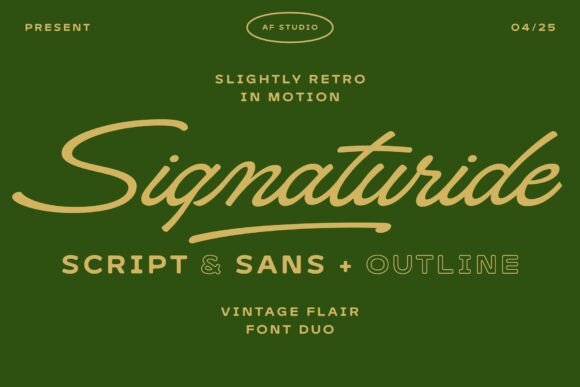
Signaturide isn't a single typeface—it's a carefully considered pairing of two distinct styles that work together in harmony. The script component carries all the fluid, slightly imperfect charm of hand-lettering from the 1950s and 60s. Think of the swooping cursive on old movie posters, diner menus, or vintage product labels. It has movement and personality baked into every curve and connecting stroke. The sans-serif companion, meanwhile, brings a clean, grounded structure that keeps things legible and balanced. Together, they create a visual conversation between expressive flair and straightforward communication.
What separates this from countless other retro-inspired fonts is how the two styles were designed as true companions. The letter proportions, weight distribution, and overall rhythm feel like they belong together—like they were drawn by the same hand on the same afternoon. That kind of cohesion doesn't happen by accident. It means you can drop both styles into a project without spending hours tweaking spacing or adjusting sizes to make them feel related. They simply work.
Where This Typeface Really Shines
The practical applications for a versatile font duo like this are surprisingly broad. On the branding side, imagine using the script style for a bakery logo while setting the tagline and supporting text in the sans-serif. Or picture a boutique clothing label where the script handles the brand name on hang tags and shopping bags, while the sans-serif takes care of care instructions and website navigation. The pairing gives you built-in hierarchy without needing to hunt for a second font that complements the first.
Packaging design is another natural fit. Whether you're designing labels for artisanal products, creating box layouts for subscription services, or mocking up cosmetic packaging, the vintage-inspired script adds a handcrafted, premium feel while the sans-serif keeps ingredient lists and regulatory text crisp and readable. There's an inherent trust that consumers place in packaging that looks thoughtfully designed, and typography plays a huge role in that perception.
Social media graphics benefit enormously from having a distinctive script font in your toolkit. Instagram posts, Pinterest pins, and Facebook headers all compete for attention in crowded feeds. A typeface with the kind of character Signaturide offers can stop a thumb-scroll mid-motion. Use the script for bold headlines or quote graphics, and let the sans-serif handle supporting text or calls to action. The contrast between the two creates visual interest that plain, uniform typography simply can't match.
Matching Typography to Your Project Goals
Choosing the right font style starts with understanding what you're actually trying to communicate. A vintage-inspired script like the one in this duo carries specific emotional signals—warmth, authenticity, craftsmanship, nostalgia, personality. If your project aims to feel approachable and human, that's a strong match. If you're designing for a tech startup that wants to project cutting-edge innovation, a different typeface family might serve you better. The key is alignment between what your typography says visually and what your brand or message says verbally.
For editorial layouts and blog design, the sans-serif component becomes especially valuable. Long-form reading demands clarity, and this style delivers it without feeling sterile. Pair it with the script for article titles, pull quotes, or section headers to inject personality without sacrificing the reading experience. This is where many designers struggle—they find a gorgeous script font but then try to use it everywhere, including body text where it becomes exhausting to read. A well-structured duo like Signaturide solves that problem by giving you two tools designed for different jobs.
Print materials—from event invitations to business cards to poster designs—also benefit from this kind of thoughtful pairing. Wedding invitations, for instance, often rely on script fonts for elegance, but the supporting details (date, venue, RSVP information) need to be instantly legible. Having both styles from the same font family means your invitation looks cohesive rather than like a typographic patchwork quilt.
Practical Tips for Getting the Most Out of Your Font
Before committing to any premium font for a project, test it in context. Set real headlines with your actual copy, not just "Lorem ipsum." Check how the script handles different letter combinations—some script fonts stumble on certain pairs like "br," "ol," or "ty." Print a sample at the size you'll actually use. View it on different screens if it's going online. Readability at small sizes matters just as much as beauty at large display sizes.
Pay attention to the included font styles and weights. Many font duos come with alternates, ligatures, or stylistic variations that can dramatically change the look of your typography. Swapping a standard lowercase "a" for an alternate version might be the detail that makes your logo feel truly custom. Explore the full character set before settling on defaults.
Consider your commercial licensing needs upfront. If you're designing for a client, selling merchandise, or using the font in products you distribute, make sure the license covers that use. Most premium font licenses distinguish between personal and commercial use, and some have restrictions on embedding in digital products or using across multiple client projects. It's the kind of detail that's easy to overlook until it becomes a problem.
Finally, think about visual consistency across your entire brand ecosystem. If you choose Signaturide for your logo, consider carrying it through your website headings, email templates, social media templates, and printed materials. A cohesive typeface strategy across every touchpoint builds brand recognition far more effectively than switching fonts for every new project. Your audience might not consciously notice consistent typography, but they'll absolutely feel it—and that feeling is what transforms casual viewers into loyal customers.