Cowboy Boots: A Typeface That Rides Into Your Designs
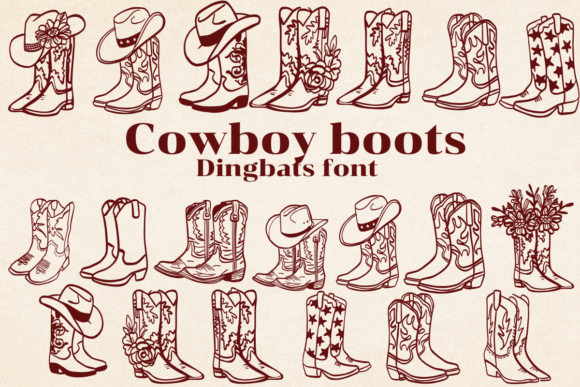
Let's be honest—most fonts are forgettable. They do their job quietly in the background, which is fine for body text or corporate reports. But when you need a design to stop someone mid-scroll, to spark a grin, or to instantly telegraph a specific vibe, you need something with personality. Enter the Cowboy Boots typeface. This isn't just a font; it's a full-blown character. Each letterform is meticulously crafted to resemble a classic cowboy boot, complete with intricate stitching details, a sturdy heel, and the unmistakable silhouette that whispers (or shouts) of wide-open spaces, rodeos, and dusty trails. It’s a creative powerhouse for anyone looking to inject instant western charm into their work.
More Than Just a Novelty: The Design Strategy Behind the Fun
At first glance, you might think a font like Cowboy Boots is purely for novelty. And while it absolutely delivers on fun, its real value lies in strategic design. In a sea of minimalist sans-serifs and elegant serifs, this display font is a bold declaration. It serves a specific purpose: to create an immediate, memorable connection. For a brand identity centered around authenticity, ruggedness, Americana, or outdoor adventure, this typeface isn't a gimmick—it's a core visual asset. It can be the cornerstone of a logo design for a BBQ restaurant, a craft brewery, a western wear boutique, or a country music podcast. The visual metaphor is built right in, saving you from having to explain your brand's vibe; the font does the heavy lifting.
Think about packaging design. A jar of artisanal hot sauce with "Fiery Frontier" set in Cowboy Boots immediately tells a story on the shelf. It promises flavor with character. For social media graphics, it's a thumb-stopper. An Instagram story announcing a "Line Dance Night" or a Facebook ad for a ranch vacation becomes infinitely more engaging when the headline is set in this creative font. It’s a tool for audience engagement because it’s visually distinctive and emotionally resonant. People don't just read it; they experience it.
Practical Applications: Where This Font Truly Shines
So, where do you actually use a typeface like this? The applications are surprisingly versatile, provided you match it to the right context and audience. It’s all about visual consistency and professional presentation.
- Branding & Logo Design: Ideal for businesses where a western, vintage, or handcrafted aesthetic is key. Think beyond just cowboy hats—consider artisanal food products, outdoor adventure companies, or music venues with a rootsy vibe.
- Editorial & Print Materials: Use it for standout headlines in magazines, posters for local events, or chapter titles in a book with a western theme. It adds a layer of thematic design that standard serif fonts or sans serif fonts can't provide.
- Merchandise & Invitations: This is where it truly excels. T-shirts, hats, mugs, and tote bags come alive. Wedding invitations for a rustic ranch ceremony or party invites for a hoedown become keepsakes.
- Digital Products & Marketing Assets: Create compelling web design headers for a niche blog, design engaging email newsletter graphics, or develop unique digital planners and worksheets. As a premium font, it ensures your digital products look polished and intentional.
The key is restraint. You wouldn't set a 500-word blog post in Cowboy Boots—the readability considerations of a highly decorative display font make it impractical for long-form text. Its power is in the headline, the logo mark, the single impactful word. Pair it wisely. A classic, clean sans serif font like Montserrat or Lato for body text creates a perfect balance, letting the Cowboy Boots headline be the star without sacrificing overall readability.
Making It Work: Font Pairing and Licensing Wisdom
Adopting a font with this much personality requires a thoughtful approach. First, review the included font styles. Does it come with alternates, ligatures, or multiple weights? These extras can provide much-needed flexibility, allowing you to create variations that keep your designs fresh while maintaining the core aesthetic.
Next, test font pairings rigorously. The goal is harmony, not competition. Since Cowboy Boots is a handwritten font style with a strong theme, it needs a grounded partner. A neutral geometric sans-serif or a sturdy, simple serif font will provide a clean canvas. Avoid pairing it with other highly stylized fonts like a fancy script font—the result will be visual chaos.
Finally, and crucially for any commercial use, understand the commercial licensing. If you're using this for a client project, merchandise for sale, or any asset that will be distributed, you need to ensure you have the correct license. This is a non-negotiable part of using design assets professionally. It protects both you and the font creator. A commercial font license is an investment in your project's legal and professional integrity.
In the end, the Cowboy Boots typeface is a specialized tool. It won't be right for every project. But for the right project—the one that needs to feel authentic, rugged, fun, and unmistakably western—it's not just a good choice; it's the perfect one. It transforms a simple design into a story, a brand into an experience, and a message into something people will remember long after they've scrolled past.